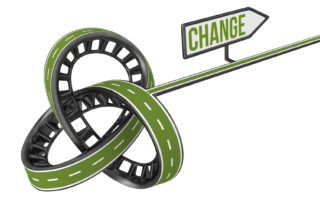


Right Number – Wrong Measure

What if the unemployment rate is the wrong measure?

The U.S. economy added 243,000 jobs in January 2012, and the unemployment rate dropped from 8.5 percent to 8.3 percent.

That’s huge, and everyone should be excited regardless of their political affiliation. This is the type of employment gain that solidifies the economic recovery.

But, what if the right number turns out to be the wrong measure?

Economist John R. Lott, quoted in a Baltimore Sun opinion piece that ran on February 11, 2012, noted that while the unemployment rate had indeed dropped, the number of unemployed had risen from 11.6 million in January 2009 to 12.8 million in January 2012. Additionally, 43 percent of the unemployed had been out of work for six months or more compared to 29 percent in January 2009.

Need more confusion? Outsourcing firm Challenger, Gray & Christmas announced that layoffs in January 2012 were up 28 percent from December 2011 and 39 percent from January 2011.

So is the job situation getting better or worse? The answer to both is, “Yes.”

The unemployment rate is affected by two numbers: those working and those who have dropped out of the workforce. In other words, the unemployment rate can show improvement when people give up on finding a job. And, about 1.2 million have done just that.

Are we witnessing a seismic shift?

Supporters of President Obama are inclined to read this as “gotcha” politics. Opponents are equally inclined to view it as further proof that President Obama can’t be trusted.

Both are missing the point. Presidents have historically used the unemployment rate as an indicator of economic health. They take credit when it improves and blame when it gets worse.

History tells us that a drop in the unemployment rate translates to an increase in people working. But, what if we are seeing a fundamental shift in how the economy works? More important, what if we are witnessing a shift in how society views their opportunity for work?

What this means for you

As a teenager, I worked as the statistician for the local sports editor covering high school football games. I kept track of the number of first downs, penalties, yards gained, fumbles, interceptions, and any other piece of information that might be interesting to know.

Most games, you could look at the statistics and tell who won. Twenty first downs are better than four. Three hundred yards gained is better than fifty.

But not always. Sometimes a team could dominate the statistics and still lose the game.

You can have the right number and still be focused on the wrong measure. The United States can win the battle to lower the unemployment rate and lose the total employment game.

Sales can be up, and your company can still go out of business because you focused on the wrong measure. Your weight may be perfect, but you can still die because you forgot to keep track of your cholesterol.

Managers keep score based on the game they believe they are playing. Leaders constantly scan the horizon to make sure they are playing the right game.

The difference in those two perspectives keep you focused on the results that matter.

Posted in Accountability, Business Growth, Business Strategy, Corporate Culture, Decision Making, Democrats, Execution, Growing your business, Innovation, Leader, Leadership, Performance Improvement, President Obama, Randy Pennington, Republicans, Results, Uncategorized | Tagged , , , , , , , , , , , , , , , , , , | Leave a comment

Mitt, Newt, and Leadership Lessons from the Campaign

If you are a Democrat, you might have learned that Jon Huntsman is a Republican you could learn to at least tolerate even if you couldn’t bring yourself to actually like him. You probably didn’t see much to change your mind in positive manner about the other candidates – unless you think that President Obama might be too conservative on foreign affairs. Then you might have developed an affinity for Congressman Ron Paul.

If you are a Republican, you have learned that there is not one perfect candidate and that there are things to like and dislike about all of them.

But if you are a leader, the on-going battle between Mitt Romney and Newt Gingrich offers two important lessons about selling yourself and your ideas.

1. You have to connect with the head and the heart.

Consider Mitt Romney. He looks and speaks Presidential. He has a proven track record in the private sector. He knows how to create jobs. His views are at or near the center of the American political spectrum. He has an outstanding organization with plenty of money. He polls well against President Obama even before the general election smear tactics/campaign begins.

If you are thinking with your head, Mitt Romney is the logical choice for the Republicans to nominate.

And then, there is Newt Gingrich. He doesn’t particularly look Presidential, and he’s been known to sound more like your grumpy great-uncle Mory than the leader of the free world. His campaign is not particularly well funded. And, his views are often controversial. Despite his mostly brilliant performances in the Presidential debates, there is still a lingering fear that Newt will wander off the reservation and create an incident at the worst of all times.

Gingrich is a brilliant person with big ideas, but logically, he’s not the Republican nominee for the President of the United States.

Except for one thing – Newt connects with the heart. He growls at a debate moderator, and the audience cheers because deep down they wish they had the courage and intellect to say the same thing. He scolds the Washington status quo, and the audience loves him because he connects with their emotional dissatisfaction with government status quo. His ability to connect is so strong that some are willing to forgive his occasional off-the-wall remark as evidence of his authenticity and forget his long history as a player in Washington, DC.

Mitt makes people think he’s qualified to be a Presidential contender. Newt makes people feel that he’s the guy who would say what needs to be said if he were the President.

Here’s the lesson: Aristotle described three types of persuasive appeal: logos (logic); pathos (emotion); and ethos (ethical credibility). Assuming equal credibility, emotion works well for justifying short-term action, and logic works well for long-term action.

To be most effective, master the ability to persuade with logic and emotion. Ronald Reagan did so, and that is why he was called The Great Communicator.

2. People decide when it matters to them not when it matters to you.

A surprising statistic from the Iowa, New Hampshire, and South Carolina Republican primaries was the high percentage of likely voters who did not decide on the candidate for whom they would vote until just before the election.

One explanation for this could be the lack of any one candidate to connect with both the head and heart of the voters. But perhaps there is another related factor: voters knew that more information would be forthcoming almost hourly. Why should they decide early? In many ways the voters are saying that they expect the candidates to work harder to convince them.

Here’s the lesson: Followers are, in many ways, like voters. Their commitment is the vote, and it must be earned. They will decide to give you their commitment and support on their terms not yours. Leaders must work harder to understand what it takes to earn the support of followers. Otherwise, the most you will get is reluctant compliance.

Presidential elections are a living laboratory for what followers look for from their leaders. We’ll check back in on a periodic basis to dissect and amplify the lessons.

In the meantime, please weigh in with your comments.

Posted in 2012 Presidential Election, Accountability, Business Presentations, Business Speech, Business Strategy, Communication, Democrats, Integrity, Leader, Leadership, Leadership Development, President Obama, Randy Pennington, Republicans, Results, Trust, Uncategorized | Tagged , , , , , , , , , , , , , , , | 1 Comment

Corporate Paralysis

Once in a while someone comes along with the unique ability to blend life’s circumstance with solid business advice. And in the case of Chad Hymas, he’s also an incredibly good person.

Chad’s new book, Doing What Must Be Done, will take you on a journey from despair to triumph. At the age of 27, he had a beautiful family and everything going his way. Then a terrible accident changed his life forever. The story would end there for most people. But Chad Hymas isn’t like most people.

As you are about to find out, there is much to learn from Chad.

I recommend that you purchase Doing What Must Be Done right now. Its lessons are important for your life and your business.

Randy Pennington

Continue reading

Posted in Accountability, Business Growth, Communication, Execution, Growing your business, Integrity, Leader, Leadership, Personal Development, Results, Uncategorized | Tagged , , , , , , , , , , , , , | 2 Comments

Pennington Performance Group 2012 Economic & Workplace Predictions

We’ve been doing annual business and workplace predictions for our clients since 2005. This is the second year we have posted them here for wider distribution. We are different from others who publicize their predictions in one very important way – we let you know how accurate we were the previous year.

We’ll begin with a review of our 2011 predictions. Here are the five predictions we made going into last year:

• It’s beginning to feel like a recovery.
We asked an important question in 2011: “What if this is the new normal?”

It turns out that we were right. The economy was in recovery mode for most of the year, and even main street was starting to feel more confident by the end of the year. But as we cautioned, the debt crisis in Europe was a drag that is still present in 2012.

• Jobs: improving but nowhere close to being back.
We said that it would take sustained growth in the range of 450,000 jobs per month for the next 18 to 24 months to return to unemployment rate to something close to what we remember just a few years ago. And, we said that nothing much would be felt until the second half of the year.

The job growth numbers in the fourth quarter of 2011 show that we were on target with a realistic unemployment rate at 8.5% (the high end of our predicted range of 8.2% to 8.5%).

• Battle for the best heats up.
We accurately predicted that employers would pay more attention to engagement and compensation in 2011. Training budgets began to thaw from their deep freeze, and “culture” became the code word for all things related to organizational development.

• Organized labor and substantial immigration reform shut out in Congress.
We predicted that organized labor would not get its “Employee Free Choice Act” through Congress. We also said that there would be nothing significant completed on immigration reform. In hindsight, we should have gone even farther by predicting that Congress would be completely dysfunctional. And though we were right on Congress, the Obama administration may look at changes via Executive Order. They won’t be as much as he would like, but it could set up an interesting confrontation with Congress.

• The 2012 Presidential election has begun.
We said that every action would be filtered through the lens of the 2012 Presidential election. That is correct.

We also said that you could expect to see more centrist priorities prevail. We missed that one by a mile. It turns out that both the Democrats and Republicans believe they can afford to blame the other for a lack of cooperation. Bi-partisan leadership was an oxymoron for most of the year.

By my math, we hit 4.5 out of 5 for a score of 90%.

What’s Ahead for 2012
Here are five economic and workplace related predictions for 2012:

• Hold your breath – and your nose – until November. The Republican nomination should be wrapped up by May. That’s when the conversation really gets interesting. The Republicans will point to the glacial pace of the recovery. The Democrats will tout consistent positive effort. You will hear that this is a battle for the soul of America, and the accusations will get personal. In other words, it is just another U.S. Presidential election year. This will be entertaining theater unless we are hit by an unplanned calamity – like the North Korean or Iranian government doing something stupid.

• The recovery expands … sort of. If I am correct that the world economies are tied together more closely than most people imagined, the U.S. economy will experience another year of slow growth. I’m thinking 2.0% to 2.5% on average through the first six months. If I am wrong – and I hope that I am – economic growth in the U.S. is poised to accelerate. Most businesses have cut all the fat out of their operations. The focus will be on growing the top line. Election results are the variable for the end of next year, although I don’t see an outcome that dramatically changes things in the short term. The good news is that state and local governments should see their revenues flatten and perhaps grow a little as housing prices solidify and sales tax receipts pick up toward the end of the year.

• It’s beginning to feel a little like job growth. Adding two hundred thousand jobs per month normally sounds like a big deal. This recovery is not normal.

We’ll continue to see hiring, and it will occur mostly in small to medium sized businesses. Large companies will be very strategic in their hiring as they wait for the European debt crisis to play out. There will continue to be pockets of strong job availability (Have you looked at North Dakota yet?). And, there will continue to be demand for health care professionals with training (See the prediction on education that follows).

If you can help companies grow their top line sales, people want to talk to you.

Unfortunately, your opportunities for finding a new job will be diminished if you are older or less educated. I can see the unemployment rate in the 7.5% to 7.9% range by the 2012 Election Day. The key number, however, is the number of people not working or working at a job for which they are over qualified. That number will continue to be higher than the unemployment rate suggests for the entire year.

• Education matters more than ever. If you don’t have a high school diploma or GED, get one. If you don’t have at least some college or haven’t completed a trade education program, go do that. If you are close to completing a degree of any sort, stay with it. An Associate’s degree is becoming this generation’s high school diploma. Your level of education is becoming the single most important factor in landing a job. With college graduates working as Barista’s at Starbucks, the competition for the best jobs will be fierce.

One more observation about education: Don’t choke yourself with debt to pay for an education that you may not need. Colleges and universities are a business, too. Tuition is their equivalent of sales. Investing in yourself through education is smart. Taking on debt that you can never repay because your degree is worthless in the marketplace isn’t.

• The Millennials are really coming this time. I’ve been waiting to say this for several years now. The Millennial generation born after 1983 is finally ready to take their place in today’s organizations. They were ready back in 2008, but the economic meltdown hit them exceptionally hard. Expect big employment gains from this group now that hiring is picking up. And with that, get ready for a highly motivated group that works extremely well in teams and has a strong desire to succeed. You can also expect this group to challenge your thinking, your use of technology, and in some cases, your authority.

Managers will have a choice: learn to relate to this group and harness their energy to help you succeed, OR watch the best and brightest of this generation look to your competitor for an opportunity to kick your butt.

2012 has the potential to be a pivotal year in our economy. And, I am absolutely sure that, collectively, we have an opportunity to make things better. Here’s wishing you a wonderful year filled with amazing results!

©2012 by Pennington Performance Group; Addison, TX. All rights reserved. This article may be downloaded for personal and professional development. Copies may be shared within an organization, and reproduction for publication is encouraged, with the following attribution: By Randy Pennington, President of Pennington Performance Group. Contact 972-980-9857 or Mary@penningtongroup.com.

Posted in 2012 Business & Workplace Predictions, Accountability, Business Growth, Business Strategy, Corporate Culture, Democrats, Execution, Growing your business, Innovation, Leader, Leadership, Performance Improvement, Randy Pennington, Results, Tea Party, Uncategorized | Tagged , , , , , , , , , , , , , , | 4 Comments

Act Now To Earn Trust

People trust you, right?

Most people won’t look you in the eye and say, “I don’t trust you.” That is especially true if you are in a position of power. But, the symptoms of mistrust are there. It is up to us to see them.

You could be experiencing a lack of trust if you are seeing any of the following:

    • Withholding information and selective communication
    • Questioning goals, strategies, actions and decisions
    • Protecting their own self-interest at the expense of the team or organization
    • Acting inconsistently with the organization’s values
    • Low or diminishing commitment and engagement

Here’s What You Can Do
Here are six actions you can take immediately to earn and maintain the trust of those you want to influence:

1. Follow through on commitments. Our research with organizations shows that the number one behavior causing mistrust is managers not doing what they said they would do. It is that way in most types of relationships.

If you can’t meet a promised deadline, tell people in advance. If you promise to run interference for your team, make sure your sense of urgency matches theirs and report the results. If you tell your team that being at work on time is important, make sure you address the person who is chronically late. If you don’t honor commitments, you won’t maintain trust.

2. Communicate, communicate, and then communicate. Communication is everything and everything communicates. Talk straight, and talk often. Set clear expectations and create shared understanding of priorities. Your team knows that there are things you cannot share. They want to know everything you can talk about, and they want to feel that you are telling them the truth rather than spinning the message for your own benefit.

Communication goes beyond talking. A reputation for listening and actually caring about what others are saying is the stuff of legends.

3. Get better at your job. Would you blindly follow someone out of a burning building if you were convinced that they had no idea what they were doing or where they were going? Then why would you trust a minimally competent leader to provide direction, set priorities, or keep the team focused on results?

Your team improves when you improve. More important, they trust more and question less in uncertain times when they believe that you know what you are doing.

4. Be consistent. We value and learn to trust consistency in action and response. When consistency is absent, people naturally protect their own interests even if it makes the team less successful. When consistency is present—especially when combined with open communication—people tell you what you need to hear rather than what you want to hear. They are more confident, and they are not constantly looking over their shoulder to see how you are going to react to every incident or piece of bad news.

5. Be very clear about your values. What are the principles that are so important that you would never compromise them? The most difficult challenges we face are rarely the choice between a clear right and wrong. More often, the choice between competing values forces us into decisions between the better of two acceptable options or the lesser of two poor ones. The clearer you are on your values, the more trust you will build.

6. Have their back. There will come a time when you can either stand up for your team or throw them under the bus. You will have an option to be an advocate for their success or allow them to flounder on their own.

The outcome of standing up for your team is less important than the action of doing so. Your team knows that you can’t control every decision or action. You will earn their respect and trust when they know that you will stand up for them even when it is not convenient.

The absence of trust turns small problems into huge barriers. It causes people to focus internally on protecting themselves rather than externally on meeting customer needs. Most important, it creates a cancer that destroys any opportunity for long-term success.

Don’t wait. Act now to build and maintain trust.

Posted in Accountability, Business Growth, Business Strategy, Communication, Corporate Culture, Employee Retention, Growing your business, Leader, Leadership, Performance Improvement, Personal Development, Randy Pennington, Results, Trust, Uncategorized | Tagged , , , , , , , , , , , , , , | Comments Off

Delivering Results in the New Abnormal

The unemployment rate has dropped to 8.6 percent as of the end of November 2011. That means we’re heading back to normal, right?

Hardly. It will be at least two years – and realistically longer – before we return to the employment levels of 2006 and 2007.

So here’s a scary thought: What if the turbulence that we’ve seen in the past three years is the new normal?

There were 13.9 million people unemployed at the end of October 2011 when the unemployment rate was at 9 percent. Only 120,000 jobs were added in November, so you must look at the significant drop in the unemployment rate through skeptical eyes.

The Rest of the Story

The unemployment rate isn’t the entire story. There are a little less than 9 million people working part-time because they can’t find a full time job and countless more who are underemployed. In addition, the economy needs to add about 100,000 jobs per month just to cover the normal expansion.

Some of the jobs we’ve lost since 2008 will never come back. So we would have to average 250,000 jobs per month for between three and four years to return to the unemployment levels of 2006.

In addition, the debt issues around the world continue to be a drag on the economy. Home construction – the fuel for much of our growth in the past – is near all-time lows. Competition is stronger than ever. Large companies are still innovating to be more productive while sitting on mountains of cash. Small to mid-sized companies are reluctantly adding jobs amidst uncertainty. And, the gridlock in Washington and the upcoming Presidential election represent a number of opportunities for nothing much to happen that will make things better.

Consistent positive movement will be a huge boost to confidence, but let’s be honest – there are a lot of moving parts to returning back to what we think of as “normal.” In fact, the “new abnormal” may be a better term to describe our situation.

So what is the new abnormal?

You are going to see parts of the economy doing very well and other areas sucking wind. There are a few common factors, however:

    • The pace of change is increasing even more than we thought was possible. Everyone is running as hard as they can, and if they aren’t, they are toast.
    • The need to add value and provide a compelling reason to choose you is – or should be – front and center for every organization, department, team, and individual.
    • Flawless execution is the standard to survive, and every detail has an impact.
    • Doing everything right is the best opportunity for ensuring your success, but even that is no guarantee. Sometimes you lose because customers simply prefer another product or service over yours. Need proof? Look no further than the Android based tablet computers and smart phones that are selling poorly against Apple products despite performance that is comparable overall.

What should leaders be doing today?
Here are three things you must do to stand out today and continue to deliver results in the new environment:

    1. Focus relentlessly on giving customer what they need and want. That means building partnerships that are so strong that your customer looks for opportunities to sell for you. And, it means knowing those customers need and want tomorrow even before they know it themselves.
    2. Engage employees to the point that they become zealots for your cause. A great culture will trump a great strategy every time. You can mandate compliance, but people volunteer their commitment. The best organizations never lost sight of the need for employee engagement during the downturn. The rest sacrificed trust, loyalty, and ultimately, credibility because they forgot that people make their business work.
    3. Understand exactly how your business model adds value to the customer while allowing you to be profitable, and then master the implementation of that model. You can’t out-Wal-Mart Wal-Mart. You can’t out-Lexus Lexus. But, you must understand exactly what separates the heroes from the wanna-be’s in the hearts and minds of your customers. And then, you must be relentless in perfecting and executing that model.

This is an exciting time to be in the business of building a team, a department, and an entire organization. It is not for the faint of heart, however.

The legendary brands of the future are being created today by leaders and organizations who relish the opportunity to compete and master life in the new abnormal.

Posted in Accountability, Add value, Business Growth, Business Strategy, Corporate Culture, Execution, Growing your business, Innovation, Leader, Leadership, Leadership Development, Performance Improvement, Personal Development, Randy Pennington, Results, Trust | Tagged , , , , , , , , , , , , , , , , , , , | 1 Comment

Leadership and the Occupation

Two months and counting. Truthfully, did you believe that the Occupy movement would have lasted this long?

Protests happen all the time in this country. Travel to Washington, DC on virtually any day and you will see some group making their presence felt and beliefs known. The freedom to assemble and communicate your opinion is a sacred right in our country that was founded on a protest movement.

And yet, we haven’t seen a movement like this since … last year if you understand that the Occupy movement – while different in its goals – was born out of a frustration that shares striking similarities to the Tea Party.

So what can leaders learn from a movement that has captured the news and proven to be more than just a group of people gathering to share their dissatisfaction? Here are four lessons:

1. You can’t trick the world. The initial stories from the Occupy Wall Street protests shared a similar theme of college graduates unable to find desirable jobs or repay their college loans. This is the logical outcome of three groups that tried to trick the world:

1. The parents who poured the message into their children’s heads that being happy and getting everything you want is a fact of life.
2. The educational establishment that sold the idea that a college degree – even one in a field that has no long-term value in a crowded job market – was a guarantee of meaningful employment and worth crippling debt.
3. The students who believed the first two groups and racked up debt to pursue an education that is virtually useless. They are, in my mind, the least to blame because they were sold the illusion that you can trick the world into guaranteeing happiness or economic success.

    The lesson for leaders: Worth in the marketplace is based on value provided. It works that way for individuals, teams, and companies. You can study anything you want. You can produce any product or service you want. The world determines its value based on what’s important to them. Success – economic, relational, and emotional – is earned not guaranteed. It is your job to make sure everyone you influence knows how the world works.

2. Focus matters. The protest movements of the past advocated for a clear goal and presented a course of action to satisfy their grievances. The Occupy movement doesn’t. Focus minimizes both distraction and the influence of fringe elements. It defines the desired state in clear terms that make it easy for others to join the fight. The Occupy movement has held up remarkably well considering that there is no consistent call to action. Imagine its success if it had developed even a minimum amount of focus.

    The lesson for leaders: A successful message about change must answer three questions: (1) Change from what to what? (2) Why is this change important to me? (3) What do you want me to do different? Greater clarity of focus increases the opportunity for success.

3. Fairness and freedom are important. The image of the 1 percent amassing enormous wealth on the backs of the 99 percent who are struggling is a powerful reminder that people run toward opportunity when they believe the game isn’t rigged for the benefit of a few. A sense of fairness and the desire for freedom drove the Arab Spring revolts that toppled dictators. It fueled the overturning of feudal Europe, the American Revolution, and the demand for Civil Rights around the world.

    The lesson for leaders: People act for their reasons not yours. You can’t ignore the innate human desire for freedom to pursue their dreams. And, you can’t violate the fundamental sense of fairness that exists without eventually seeing people rebel. That rebellion can be visible like the protests, or it can be subtle like the malicious obedience you see in organizations when work practices are viewed as oppressive and demeaning.

4. Ideas travel at light speed. The Occupy movement appeared virtually out of nowhere and spread from Wall Street to Oakland with surprising speed. No one drove from town to town or wrote letters circulating their ideas. Messages, pictures, and video were shared digitally in real time.

    The lesson for leaders: Ideas have always changed the world. Technology creates the fuel that transforms their slow organic spread into a wildfire that consumes. You must understand how to use the power of technology to spread and sustain your message. More important, find ways for others to discover, connect with, and advocate for your cause.

Two final thoughts:

1. The most important service any leader can provide is to prepare both the people and the environment for lasting success. We prepare the environment by ensuring freedom of access and, to the greatest extent possible, fairness of the process. We prepare the people by teaching the notions of value given for value provided and personal accountability.
2. It is a mistake to support or dismiss the Occupy movement simply on the basis of your philosophical alignment with its goals. Not all capitalists are bad. And, not every capitalist is good. It is, however, important to celebrate the success of democracy that is on display.

Posted in Accountability, Add value, Business Growth, Business Strategy, Communication, Corporate Culture, Decision Making, Democrats, Execution, Innovation, Integrity, Leader, Leadership, Occupy Wall Street, Performance Improvement, Personal Development, President Obama, Randy Pennington, Republicans, Results, Stupid Decisions, Tea Party, Trust | Tagged , , , , , , , , , , , , , , , , , , , , , , , | Comments Off

If Time Were Really Money

Would you pay two hours of your life for a bus ride? Would you choose to sleep late if you had less than one day to live? Would you work harder to deliver results if it added extra time to your life?

The movie “In Time” takes us to a world in the not too distant future where time is the currency. In this futuristic world, everyone stops aging at age 25 and stops living one year after that UNLESS they bank additional time.

Wages are paid in hours and minutes. Gambling debts are paid in time transferred to the winner. The wealthy walk slowly, savor every moment, and hire security to protect themselves. They can live forever without aging. The poor run.

This question ran through my head as I watched the movie: What would I do differently if time was the real money of the day?

Would the twenty minutes watching videos on You Tube be worth twenty minutes of my life? Would I pay one hour for a nice bottle of wine, or would I stick with the Iced Tea for 5 minutes? Would I ensure that my work added so much value that I received a bonus in time, or would I do just the minimum?

These are more than interesting dinner party questions for people with too much time on their hands. They cut to the core of what is important in your life. Would you give someone a half-hour so that they could eat a meal if you knew that it could mean your death? Would you hoard your time, or would you give it away?

Would you steal time from another if it meant living for another day? Would you work harder or show a greater sense of urgency in your work if it earned you more time?

The way we invest and spend our time says a lot about our commitment to achieving the results we say that we want. “To Do” lists declare our intentions. “It’s Done” lists demonstrate our commitment to achieving results.

The English writer Charles Caleb Colton, said, “Much may be done in those little shreds and patches of time which every day produces, and which most men throw away.”

The proverb says that Time is money. What would you do differently if that was true in the most literal of terms?

Posted in Accountability, Add value, Business Growth, Business Strategy, Communication, Decision Making, Execution, Growing your business, Integrity, Leader, Leadership, Leadership Development, Mistakes, Performance Improvement, Personal Development, Randy Pennington, Results, Trust | Tagged , , , , , , , , , , , , , , , | Comments Off

The Only Culture That Matters

Have you noticed it, too? “Culture” is becoming the catch word for virtually every new business book, training program, or speech.

There are people out there who want to help you develop a culture of accountability, service, innovation, celebration, learning, listening, sustainability, trust, recognition, teamwork, engagement, and change.

The only culture that matters is the one that helps you and your organization achieve your desired results.

There’s nothing wrong and potentially a lot of good that can come from each of the “cultures” being marketed to you. But at the end of the day, we all live and die by our results.

Need an example? Look no further than the slew of dot com companies that imploded with the collapse of the industry. Many were heralded for a culture that promoted employee engagement, fun, and innovation. Remember the Foosball tables in the break room, after-hours beer busts, and relaxed dress codes? These were critical components of a culture that attracted and retained top talent.

Here’s the lesson: fun without results is a party not a company. The same can be said for any type of culture that sounds great on the surface but is not directly tied to delivering results.

Why Culture is Hot

I read my first book on corporate culture in 1982 and was immediately hooked on the subject. It was called Corporate Cultures, and it mirrored the work that I and the other leaders were doing at the start-up mental health facility we had opened in Waco, Texas.

Corporate culture, for the most part, was ignored for many years as the leading and wanna-be gurus migrated to quality, customer service, and change. It is making a resurgence today for one simple reason: culture prevails in the face of changed strategies, new programs, and well-intentioned initiatives.

Culture is a hot topic today for the same reasons Deal and Kennedy believed it was important in 1982:

“American business needs to return to the original concepts and ideas that made institutions like NCR, General Electric, International Business Machines (IBM), Procter & Gamble, 3M, and others great. We need to remember that people make businesses work. And, we need to relearn old lessons about how culture ties people together and gives meaning and purpose to their day-to-day lives.”

A strong, unified culture that guides and defines how things are done is, and has always been, at the core of every successful business. People are re-discovering the truth that good ideas are useless unless implemented, and they are not consistently implemented in organizations unless they are integrated into the culture.

Buyer Beware

Buzzwords and program-of-the-month topics appear every few years. They show up in book titles, training programs, and speeches at corporate and association meetings. Quality was hot in the 1980’s. That gave way to customer service, change, innovation, and lately, social media.

The topics never really go away. They simply recede off of the front pages and return to being need driven rather than fad driven.

There are a few gurus who make their names based on a best-selling book, and there are scores of second and third tier speakers, trainers, and consultants who migrate from topic to topic to keep their calendars filled.

The impact of this process is largely benign. Even those who are migrating from topic to topic generally base their programs on solid (or at least adequate) research. It is different when you are dealing with culture

The dictionary defines “culture” as the integrated patterns of thought, speech, and action. You can’t change a culture with a training program, book, or speech. It is a two to three year effort, at best, and it requires a depth of knowledge and experience that goes beyond a single activity or event.

Add in that the only culture that matters is the one that helps you deliver results, and culture change becomes a very personalized process.

Here are the three questions you should ask before you buy a culture of anything or engage someone to help you transform your culture:
1. What is the competitive advantage you must integrate into your culture to compete in your market? Wal-Mart’s culture supports its competitive strategy to be the low-cost provider. Zappo’s culture supports it competitive strategy of amazing service. Southwest Airlines’ culture supports its competitive strategy of providing great service in a fun, low-cost environment. Your culture must reflect the business strategy that will help you deliver results that allow you to stand out.

2. What is the people philosophy that must be integrated into the culture to help you attract, retain, grow, and engage the staff you need to implement your competitive business strategy? The fun flight attendants on Southwest Airlines are not an accident. They nurture, grow, and sustain the environment that allows that to happen on purpose. The same applies to Wal-Mart, Zappo’s, The Container Store, or any other business that grabs and holds top talent.

3. Does the resource you select to help you develop your culture have the depth to understand your results and help you implement a plan to transform the culture? Or, are they simply selling you a book, training program, or speech? There is nothing wrong with selling books, training programs, and speeches. But, your culture defines your destiny. You can’t trust that outcome to someone who doesn’t understand your goals; the results you need; and the significance of their actions on your long-term success.

The only culture that matters is the one that helps you deliver results. Please be intentional in your efforts to build and sustain it.

Posted in Accountability, Business Growth, Business Strategy, Communication, Corporate Culture, Employee Retention, Execution, Growing your business, Innovation, Leader, Leadership, Leadership Development, Performance Improvement, Personal Development, Randy Pennington, Results, Trust | Tagged , , , , , , , , , , , , , , , , , , | Comments Off

Three Questions Determine Your Value

“But, there are a lot of things that we are good at!”

The frustration filled the manager’s voice as he reviewed the less-than-positive results from a survey of his group’s internal customers. The feedback stung. He might as well have been told by a complete stranger that his baby is ugly. And trust me on this one, no one likes to be told that their baby is anything other than adorable.

The reality of today’s market-driven world is brutal. We are all better at some things than others. Most of us are actually excellent – or at least better than average – at some aspects of our business or personal performance. And, that doesn’t matter unless what we do well adds value to the customer.

The first two questions must be answered for every individual, team, and company to stay relevant in today’s world:
• Are you good at the things your customer values?
• Does your customer value the things at which you are good?

Your answers will determine your market share and profitability as a business. There is a reason why the Apple iPad is flying off the shelf while other tablet devices are hoping that someone will bump into them and knock them into a shopping cart.

Your department’s or team’s answers to these two questions will have an enormous impact on whether your employer retains your function or outsources you as a commodity.

Your personal answers to these two questions determine the size of your paycheck, the amount of your raise, and whether your employer fights to keep you from leaving for a better opportunity. There is a reason why the stars on any professional athletic team make more money than the journeyman. We are compensated based on our perceived value.

You don’t have to be totally amazing in every sense of the word. You must simply be better than those with whom you compete at the things that matter to your customers. Erasmus (of Rotterdam) said it well way back in the 1500’s: “In the land of the blind, the one-eyed man is king.”

The Real Question

The third – and most important – question is, “What will you do differently as the result of your answers to questions one and two?”

Every company, team, and individual should ask and honestly answer the two questions about their value to the customer on a regular basis. This is a once per year activity at a minimum. You should do it more often if you compete in a volatile market. The most successful leaders are continually on the lookout to ensure that they are good at the things their customers value.

Unfortunately, most people and organizations won’t do much, if anything, differently based on their actual value to customers. They might ask the questions once. A few will bring it up as an agenda item in a team meeting or strategic planning session. But, most of us won’t answer the question much less do anything different.

We all tend to be guilty of 3-D Vision – Denial, Distortion, and Delusion. We deny the facts, distort reality, and delude ourselves into thinking that our challenges and circumstance are out of our own control.

3-D Vision will make you, your team, and your business irrelevant. And, there is nothing more tragic than individuals, teams, and companies who are good at some things becoming irrelevant because they didn’t have the courage to look at and improve their value in the marketplace.

Posted in Accountability, Add value, Business Growth, Business Strategy, Communication, Corporate Culture, Decision Making, Execution, Growing your business, Leader, Leadership, Leadership Development, Randy Pennington, Results, Trust | Tagged , , , , , , , , , , , , , , , , , , , | Comments Off